



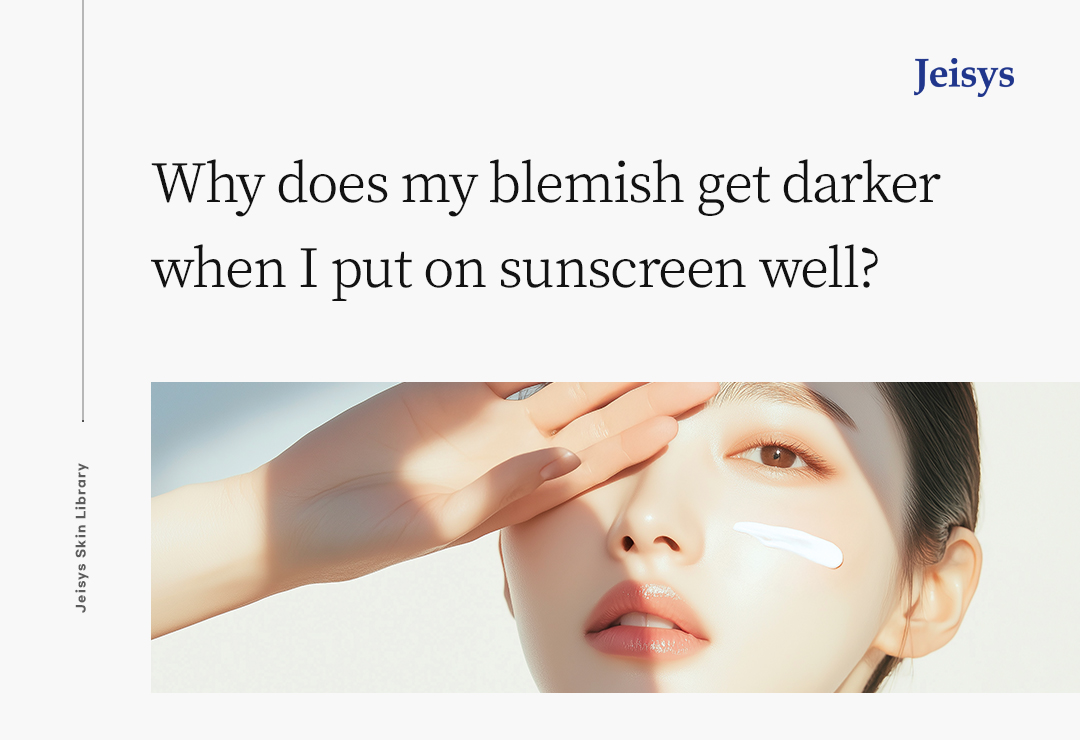
“I apply sunscreen diligently, so why are my blemishes and dark spots getting darker?” This is a question that those with blemish concerns genuinely ask very frequently at dermatology clinics.
You make sure to pack sunscreen before going out, wear a hat on days when the sunlight is strong, and are consistently taking care of your skin, but one day when you look in the mirror, the pigmentation on your cheekbones seems darker and your skin tone looks patchy. Especially when taking photos, it suddenly starts bothering you to the point where you think, “Was my blemish originally this dark?”
When that happens, you naturally come to think like this: “Was the amount of sunscreen insufficient?”, “Should I switch to a better product?”, “Do I need to receive laser treatment…” Of course, ultraviolet rays are a very important cause that induces blemishes and hyperpigmentation.
However, there is a fact that many people are missing. The cause of blemishes can be far more complex than you think. Recently, even in the field of dermatology, factors such as repeated daily irritation, skin friction, heat irritation, and inflammatory responses are being discussed together as backgrounds that worsen blemishes and hyperpigmentation.
In other words, it means that ‘weak irritation being repeated’ rather than ‘one strong irritation’ can make the skin stay dark for longer. And more irritation than you think is hidden inside the habits we repeat every single day.
Table of Contents
Trend 1. Are Ultraviolet Rays the Only Cause of Pigmentation
Trend 2. ‘Micro-Friction’ That Makes the Skin Turn Black
Trend 3. Daily Repeated Irritation Checklist
Trend 1. Are Ultraviolet Rays the Only Cause of Pigmentation
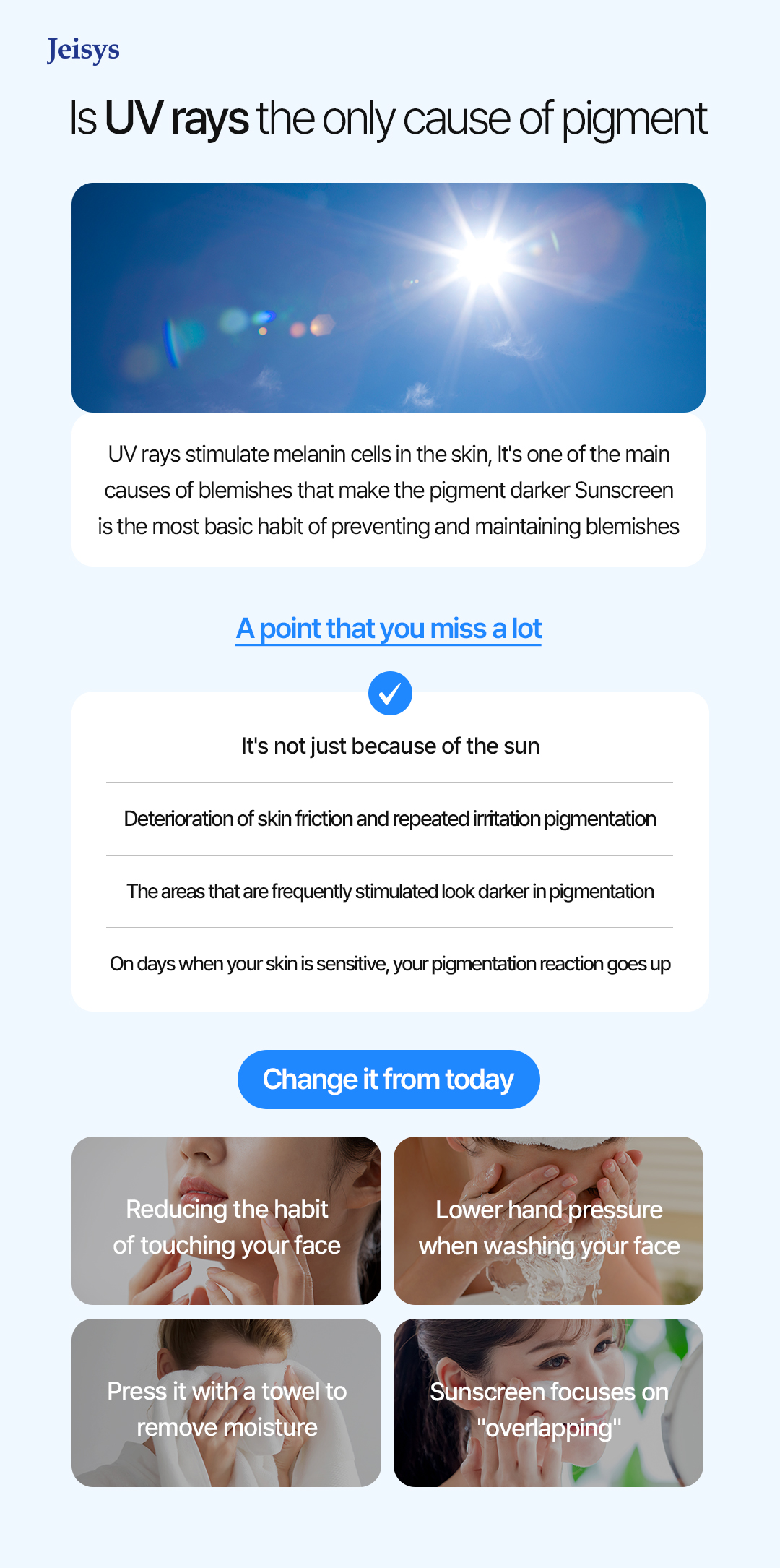
When talking about blemishes or hyperpigmentation, the first thing that comes to mind is, as expected, ultraviolet rays. In fact, ultraviolet (UV) light stimulates melanin cells inside the skin and is one of the representative blemish causes that make pigmentation darker. That is why applying sunscreen is regarded as the most foundational habit in blemish prevention and management.
Even so, some people say: “I really apply sunscreen diligently…”, “I even reapply it, so why does it get darker?” The reason may not be as simple as you think. This is because the cause of blemishes might not be a problem of ultraviolet rays alone.
Recently, there is a growing perspective that views blemishes and hyperpigmentation as a ‘multifactorial’ problem where multiple factors—such as ultraviolet rays, skin inflammation, heat irritation, skin friction in daily life, and skin barrier damage—act together.
✔ Points that are frequently missed, right here
· Blemishes are not simply due to sunlight alone
· Skin friction and repeated irritation can also worsen hyperpigmentation
· Areas that are frequently irritated, like the cheekbones, can look darker in pigmentation
· The more sensitive the skin is on a particular day, the larger the pigmentation response can be
✔ Try changing from today
· Reducing the habit of touching your face unconsciously
· Consciously lowering hand pressure when washing your face
· Removing moisture by patting gently rather than rubbing with a towel
· Focusing on “reapplying” sunscreen rather than applying “a lot at once”
Trend 2. ‘Micro-Friction’ That Makes the Skin Turn Black
When people think of skin irritation, many only recall strong irritations like intense peeling, lasers, or scrub products. However, the actual skin can react longer to a ‘situation where weak irritation is repeated every day’ rather than ‘one strong irritation’.
This part is the concept of ‘frictional hyperpigmentation’ that is being frequently discussed recently. When repeated physical irritation occurs, the skin experiences a micro-inflammatory state, and in this process, the skin can activate melanin production responses to protect itself.
Ultimately, as small irritations are repeated, the possibility of hyperpigmentation becoming darker arises. The problem is that there are truly many such irritations in our daily lives.
Especially for sensitive skin, similar impacts can manifest on a larger scale. This is because under a condition where the skin barrier is weak, irritation responses occur easily and the skin recovery speed slows down, which can increase the possibility of pigmentation remaining longer.
Therefore, for sensitive skin, a ‘less irritating routine’ rather than unconditionally strong functional products can be the start of blemish management.
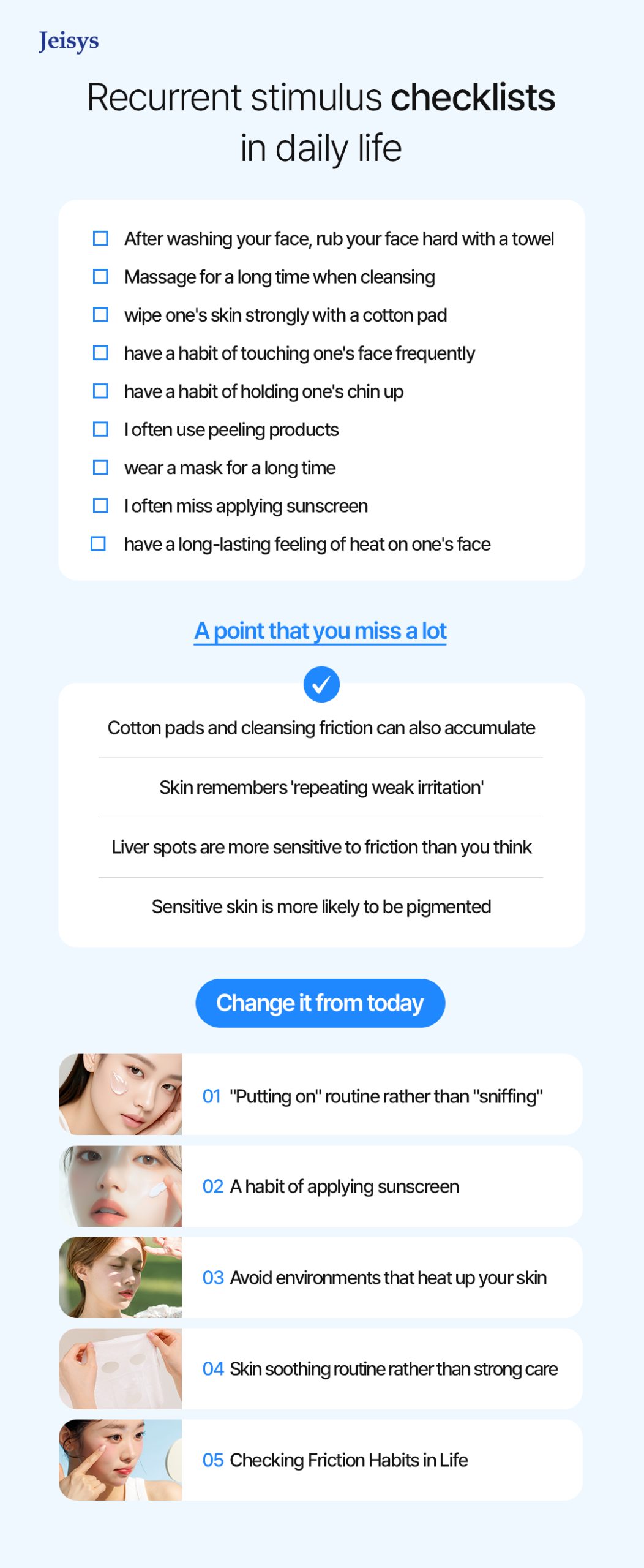
✔ Points that are frequently missed, right here
· Friction from cotton pads and cleansing can also accumulate
· The skin remembers the ‘repetition of weak irritation’
· Blemish areas are more sensitive to friction than you think
· Sensitive skin can have a higher possibility of hyperpigmentation
✔ Try changing from today
· Increasing absorbing-type routines rather than wiping toner
· Shortening cleansing time and lowering pressure
· Consciously reducing the habit of touching your face
· Managing your skin so that skin heat does not persist for a long time
· Re-checking the frequency of exfoliating dead skin cells
—
Trend 3. ‘After-Sun Repair’ Erasing Ultraviolet Damage: Glutathione & Soothing Layering
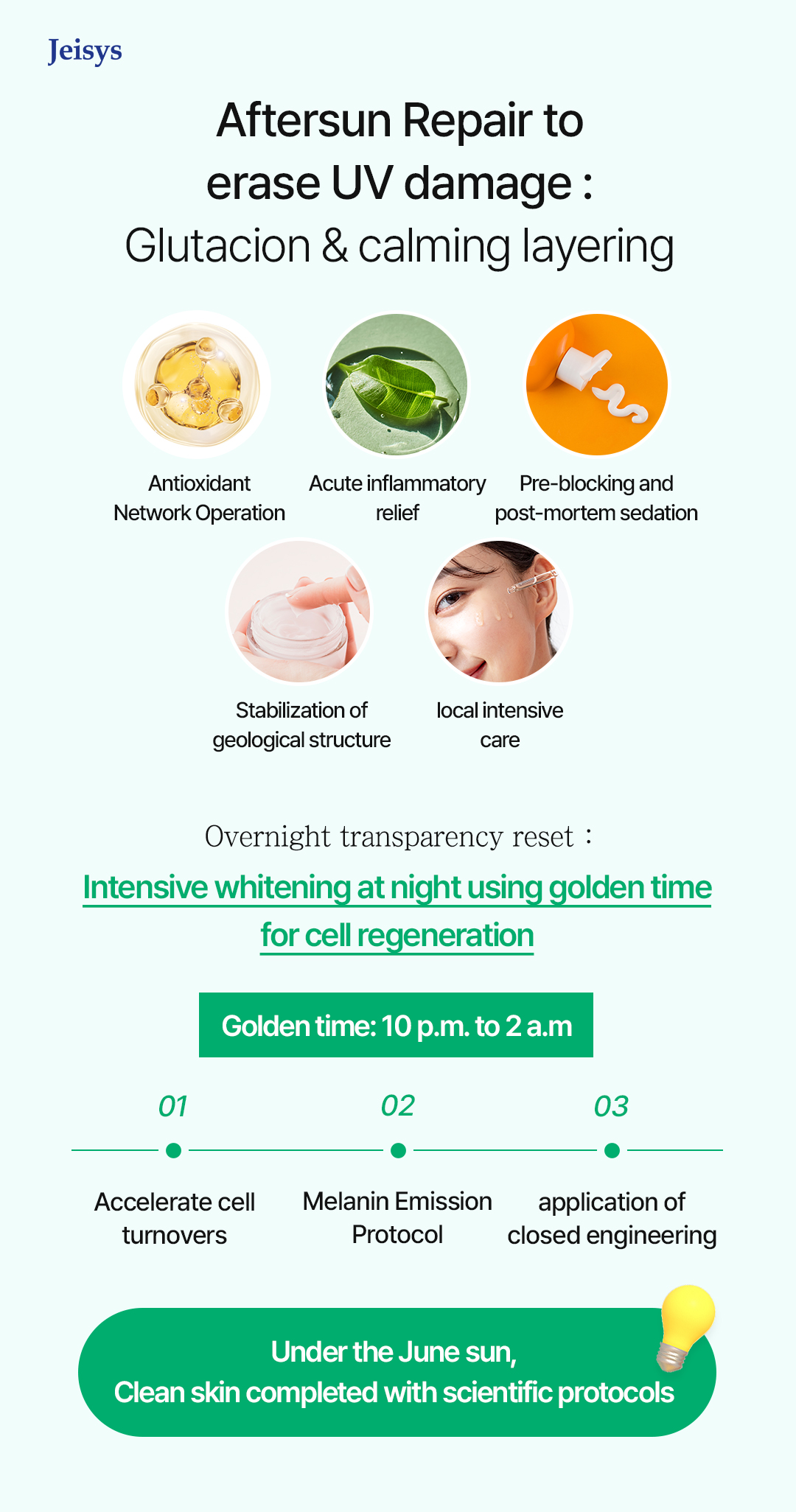
If you have finished outdoor activities for a long time under the intense sunlight, an ‘After-Sun Repair’ protocol that soothes irritated cells and drastically elevates internal cellular regeneration energy must be operated immediately.
* Operating the Antioxidant Network: The glutathione ingredient, which has recently emerged as the core of whitening, resets the redox system inside the skin. It helps recover cells damaged by ultraviolet attacks, laying the internal foundation for how to remove blemishes.
* Alleviating Acute Inflammation: If the state reddened by irritation is neglected, micro-inflammation becomes fixed, leading to darker skin hyperpigmentation. One must execute an immediate soothing process with centella asiatica extract or azulene ingredients.
* Thorough Prior Blocking and Post Soothing: The basis of how to remove blemishes, which is as important as aftercare, is the habit of applying blockers during the day. In particular, choosing a hybrid sunblock formulation containing skincare ingredients can prevent the additional formation of blemishes and dark spots without barrier irritation, doubling overall blemish reduction efficiency.
* Stabilizing Lipid Structures: When moisture evaporates through the damaged epidermal barrier, the self-recovering power of cells drops. The barrier must be closed with a cream containing ceramides and fatty acids to soothe the excessive runaway of melanocytes.
* Intensive Care for Localized Areas: Especially on areas that receive sunlight first and the most, such as around the cheekbones, layering a highly concentrated ampoule to induce intensive blemish reduction is effective.
—
Trend 4. Transparency Reset Occurring Overnight: Nighttime Intensive Whitening Utilizing the Golden Time of Cell Regeneration
If you focused on thorough defense and soothing during the day, the nighttime is the golden time (10 PM to 2 AM) to本格적으로 repair the damaged blueprints and destroy darkened traces.
* Accelerating Cell Turnover: When retinol derivatives or low-irritation peeling ingredients are introduced while cell regeneration is active overnight, the sloughing off of old keratin cells stagnating while holding pigment accelerates. This is a core routine that pushes out mottled blemishes and dark spots and brings clear skin cells up to the surface.
* Melanin Discharge Protocol: Utilizing a night-only whitening cream or sleeping pack to continuously supply active ingredients throughout the night finely breaks down and discharges chronic melanin lumps in the lower layer of the epidermis.
* Application of Sealing Engineering: Layering a highly moisturizing balm or oil formulation that lightly forms an oil film after a general essence stage prevents the evaporation of ingredients and increases the effective absorption rate reaching down to the dermal layer, showing excellent effects in deep blemish reduction.
The transparency reset routine executed elaborately overnight offsets the photo-damage accumulated during the day and is the final destination that completes how to remove blemishes most definitively.
—
Clean Skin Completed with a Scientific Protocol Under the June Sun
The combination attack of the high-temperature, high-humidity climate of June and powerful UV-B leaves scars of pigmentation that are hard to erase on the skin surface.
Neglected heat and photo-damage continuously keep the pigment formation switch turned on inside the cells, eventually inducing widespread skin hyperpigmentation and dark freckles.
However, if we understand the destruction mechanism created by light and execute systematic countermeasures stage by stage, our skin complexion can change.
A multi-layered antioxidant design that suppresses with vitamins, blocks with niacinamide, and repairs with glutathione. And a clever reset strategy that pushes away old traces by synchronizing the cell regeneration cycle overnight must be accompanied.
Break away from the effort to simply hide defects and practice a scientific protocol that purifies the fundamental environment of the cells.
This summer, you will come to possess unparalleled skin that shines clearly and firmly without yielding even in front of pouring sunlight.
ㅍ